 Flick
Consistent Character AI Video Across Every Scene
The audience should recognize the character before they inspect the details. Character consistency is a production system: references, wardrobe rules, camera coverage, and continuity checks working together.
Why do AI characters drift between shots?
Every generation makes new choices. Without a persistent reference, the model may change the face, age, hair, wardrobe, body proportions, or the way light falls across the character. A detailed text description reduces some variation but cannot carry the same visual certainty as a reference.
Motion introduces another source of drift. As the camera or character moves, the model has more opportunities to reinterpret identity. Fewer competing changes in the shot usually produce a more stable character.
What should a character reference contain?
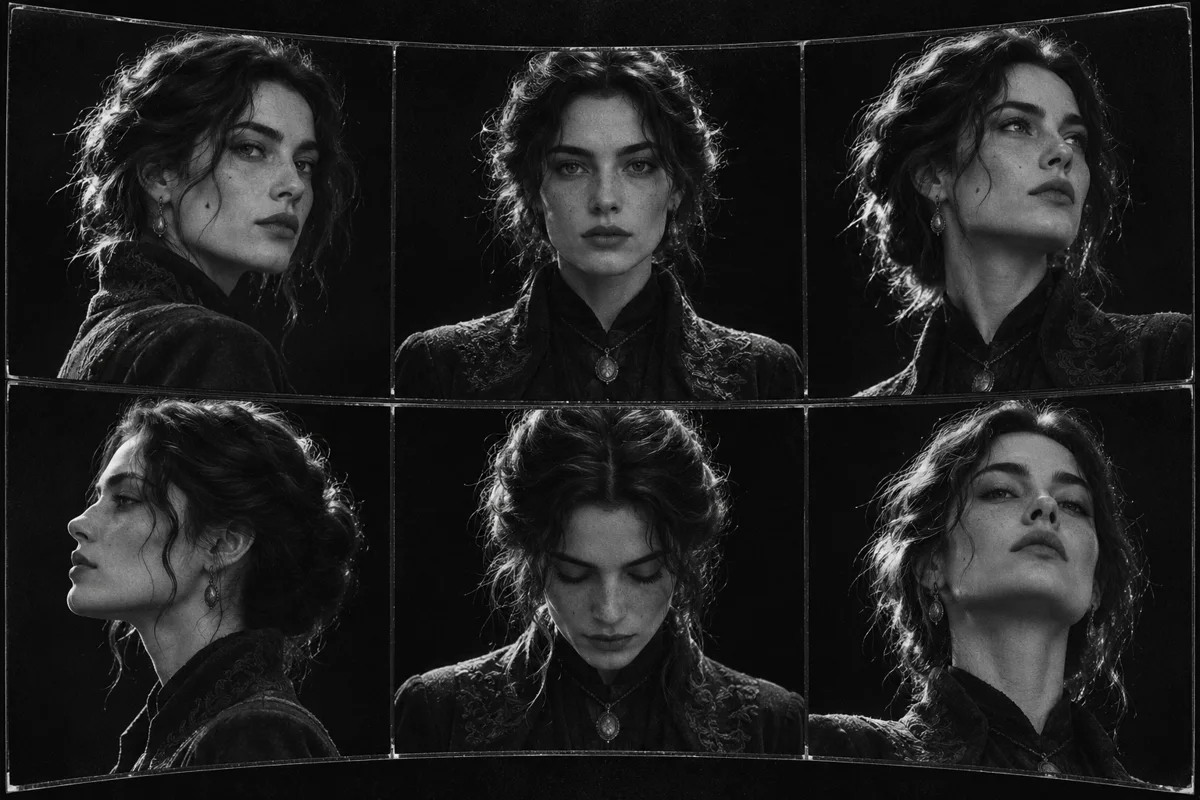
Start with a clean, front-facing portrait in neutral light. Add a three-quarter view, profile, and full-body view if the project requires them. Lock the wardrobe, hair, age, skin texture, and any signature prop.
A reference is not only a face. It is a set of continuity constraints. Write them down and carry the same approved image into storyboards and video shots instead of rewriting the description differently each time.
- Recognizable face and expression range
- Hair, makeup, age, and skin details
- Wardrobe, accessories, and signature props
- Body proportions and posture
- One neutral reference plus useful alternate angles
How should camera movement protect continuity?
Give the character and camera separate, simple jobs. A slow orbit around a mostly still character is easier to evaluate than a fast action, a costume change, and multiple camera moves at once.
When a shot needs complex action, generate a stable reference first and then increase motion incrementally. If identity begins to drift, reduce the number of simultaneous variables rather than adding more descriptive words.
How do you review consistency across a full scene?
Compare adjacent shots at the same size instead of reviewing each clip alone. Look for the character’s silhouette, eye line, wardrobe, location light, and direction of movement. A take that looks strong by itself may be unusable beside the surrounding footage.
Create a scene continuity board after the first generation pass. Place the approved character reference, each selected shot, and a short note about changes in wardrobe or emotion. The board becomes the source of truth for later pickups.
What continuity details matter most to viewers?
Faces and hair are immediate, but viewers also notice clothing, injuries, props, and eyelines. If a character holds an object in one shot and not the next, the cut can feel like a mistake even when the face is perfect.
Prioritize details by narrative importance. A wedding ring may matter more than the exact shirt texture. A central prop should receive its own reference and continuity note.
A practical character continuity stack
| Control | What to lock | Why it matters |
|---|---|---|
| Character reference | Approved face, proportions, hair, and wardrobe | Keeps generation anchored to one identity |
| Visual bible | Palette, lighting, props, and location rules | Prevents adjacent shots from feeling unrelated |
| Shot discipline | One primary camera or performance change | Reduces opportunities for identity drift |
| Sequence review | Adjacent shots and transitions | Catches continuity errors before the final edit |
Frequently asked questions
Can AI video keep the same character in every scene?+
It can stay substantially more consistent when the workflow uses approved character references, controlled shot changes, and continuity review. No generative system should be assumed to preserve identity automatically.
How many character reference images do I need?+
A strong front-facing reference is the minimum. Add three-quarter, profile, and full-body references when the scene requires multiple angles or costume and body consistency.
Does character consistency require a custom-trained model?+
Not necessarily. Reference-guided workflows can preserve identity without a custom model. For a recurring production, test the available reference controls against your specific character before committing.
What causes a consistent face to look wrong in the edit?+
A matching face can still clash with different lighting, wardrobe, posture, or eyelines. Review the whole character presentation, not just facial similarity.
Keep the same character in the story
Use approved references and connected scene planning to make every appearance feel intentional.