 Flick
Flickpedia: AI Film Inspiration and Visual Styles
A visual reference is useful when it gives a scene a rule to follow. Flickpedia turns inspiration into direction for lighting, color, camera, costume, and atmosphere.
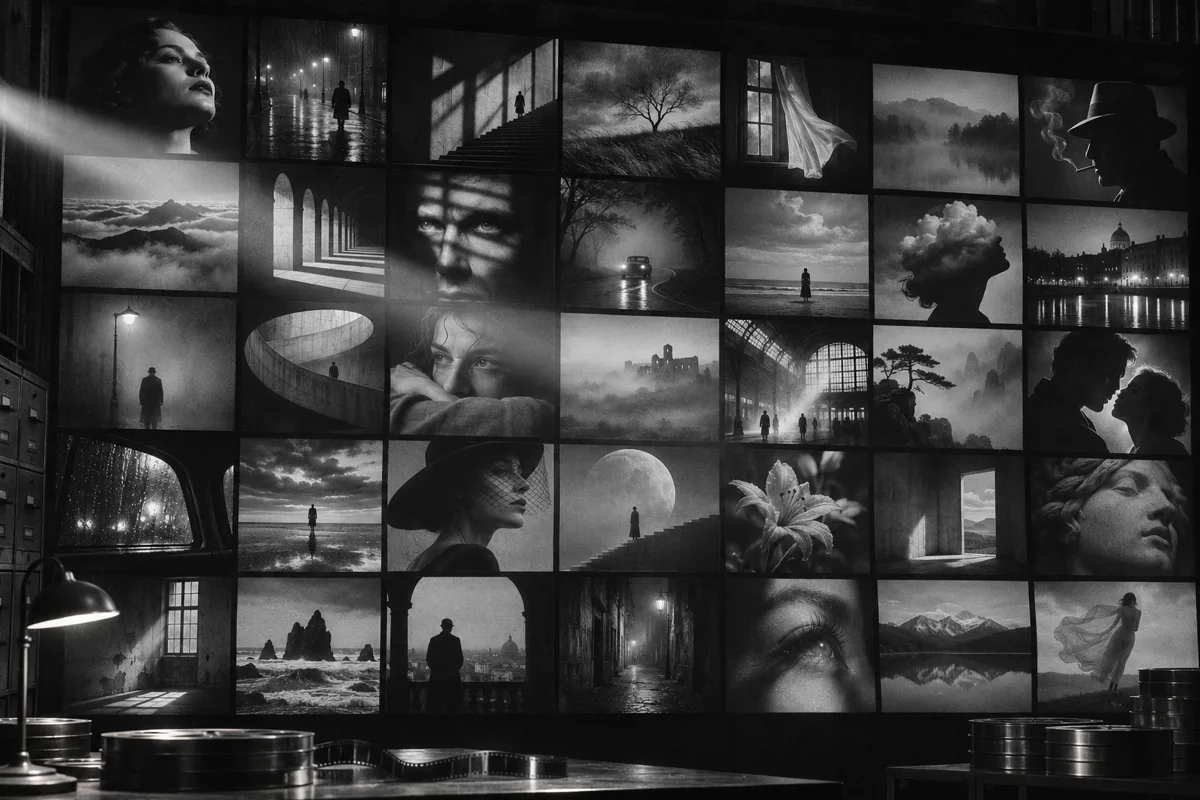
What is Flickpedia?
Flickpedia is Flick’s visual inspiration collection for filmmaking. The published product describes more than 1.5 million references across film stills, visual styles, imagery, and related directions.
This page is an editorial guide to using inspiration well. A saved image is only the beginning. The next step is identifying why it works and turning its lighting, composition, texture, or performance idea into a repeatable rule for the scene.
How do you turn a visual style into a usable prompt?
Separate the reference into controllable parts: subject, environment, palette, light source, contrast, lens, texture, and mood. Then remove everything that does not belong in your story.
A useful prompt names the visual behavior rather than a vague adjective. “Low-key side light with a hard falloff and almost no fill” gives the model more direction than “moody.” Pair the language with an image reference when identity or composition matters.
- Name the light source and direction
- Choose a palette and contrast range
- Describe the lens feel and distance
- Define texture, weather, or atmosphere
- State what must stay consistent with the scene
How should inspiration support story rather than replace it?
A collection of striking references can pull a film in several unrelated directions. Ask what each reference says about the scene: is it intimacy, threat, scale, memory, or beauty? Keep only the visual ideas that support that intention.
The storyboard is where inspiration becomes accountable. If a style cannot be carried from one shot to the next, it is not yet a visual system for the film.
How do you build a compact visual bible?
Choose a small reference set for the character, location, palette, lighting, and camera. Add short notes that explain what the production should reproduce. Too many references create ambiguity; a focused set creates recognition.
Reuse the visual bible in storyboard frames, generated stills, motion prompts, and editorial review. Consistency improves when every stage refers to the same decisions.
What is included in this Flickpedia guide?
The visual directions below use the same inspiration assets featured on flick.homes. Treat them as starting points for a specific scene. Select one direction, add a character and location from your own story, then create the storyboard before generating motion.
flick.homes is an independent third-party website. Flickpedia and related product names belong to their respective owners.
From reference to production decision
| Reference detail | Question to ask | Production instruction |
|---|---|---|
| Lighting | Where is the light coming from? | Set direction, hardness, contrast, and fill |
| Composition | What does the frame emphasize? | Choose shot size, subject placement, and negative space |
| Color | What emotional temperature matters? | Lock a compact palette and avoid unrelated accents |
| Texture | What makes the image feel physical? | Describe grain, weather, surfaces, and atmosphere |
Visual directions to try in your next scene








Frequently asked questions
What is Flickpedia?+
Flickpedia is Flick’s visual inspiration collection for filmmakers, spanning film references, imagery, styles, and creative directions.
Can I use a visual reference directly in a generation prompt?+
Yes, but translate it into specific production choices. Identify the lighting, composition, palette, texture, and subject behavior you want instead of relying on a general mood word.
How many visual references should one film use?+
Use a focused visual bible with one clear direction for character, location, light, palette, and camera. Add exceptions only when the story gives them meaning.
Is flick.homes the official Flickpedia website?+
No. flick.homes is an independent third-party website and is not affiliated with, endorsed by, sponsored by, or operated by FlickArt, Inc.
Turn visual inspiration into a scene
Choose a direction, build the storyboard, and carry the same visual logic into every generated shot.